Free overnight shipping within the contiguous 48 states!
Explaining Lab Grown Diamonds
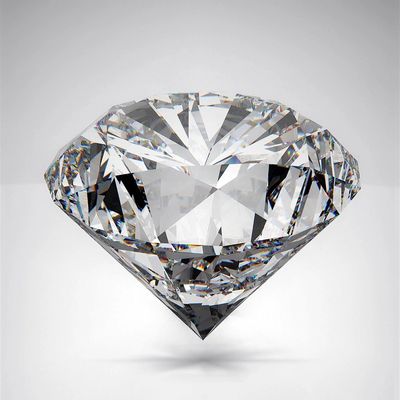
A lab‑grown diamond is, in the simplest and most accurate terms, a real diamond — chemically, physically, and optically identical to a natural diamond because both are made of pure crystalline carbon arranged in a cubic crystal structure. The difference lies only in where they form, not what they are.
Physical Properties
A lab‑grown diamond is a diamond created in a controlled laboratory environment that replicates the natural conditions under which diamonds form in the earth. It is not a simulant, not an imitation, and not a “fake.” It is a real diamond, certified by the same gemological laboratories (GIA, IGI, GCAL) and graded on the same 4Cs.
Chemically: pure carbon
Physically: identical crystal structure
Optically: same brilliance, fire, and scintillation
Lab Diamonds vs Natural Diamonds
Both natural diamonds and lab‑grown diamonds share the same defining characteristics:
• Hardness: 10 on the Mohs scale — the hardest material on earth
• Durability: identical resistance to scratching, chipping, and wear
• Appearance: same brilliance, fire, and sparkle
• Chemical Composition: pure carbon
• Crystal Structure: cubic (isometric)
Where they differ:
Origin
• Natural diamonds form 100–150 miles underground over billions of years.
• Lab‑grown diamonds form in a controlled chamber over several weeks.
Inclusions & Growth Patterns
• Natural diamonds show geological inclusions.
• Lab‑grown diamonds show metallic or growth‑pattern inclusions unique to their method of creation.
Value & Pricing
• Natural diamonds carry rarity‑based pricing.
• Lab‑grown diamonds offer larger size and higher quality at a lower cost.
Two Types of Lab Diamonds
Both types produce real diamonds, but through different technologies:
1. CVD Diamonds (Chemical Vapor Deposition)
• A thin diamond “seed” is placed in a vacuum chamber.
• Carbon‑rich gas is heated until carbon atoms bond to the seed.
• Produces high‑clarity, high‑quality diamonds with minimal metallic inclusions.
2. HPHT Diamonds (High Pressure High Temperature)
• Mimics the earth’s natural diamond‑forming environment.
• Carbon is exposed to extreme pressure and heat.
• Produces diamonds with excellent color potential and strong crystal growth.
Both methods create true diamonds, and both are recognized by all major gemological laboratories.
Lab Grown Diamonds vs Simulants
Simulants are not diamonds. They only look like diamonds at first glance but differ dramatically in composition, hardness, and optical performance. Many online retailers advertise their products being lab grown diamonds when in reality they are not genuine CVD or HPHT diamonds. Simulants such as moissanite can test as a diamond using a $30 thermal tester, but fail with professional equipment, further confusing the buyer.
1. Cubic Zirconia (CZ)
• Composition: zirconium dioxide
• Hardness: ~8.5 (much softer)
• Appearance: overly glassy, lacks diamond fire
• Durability: scratches and clouds over time
2. Moissanite
• Composition: silicon carbide
• Hardness: 9.25 (hard, but not diamond)
• Appearance: fiery rainbow flashes, often “too colorful”
• Durability: good, but not diamond‑level
Key Differences
• Simulants are not carbon crystals.
• Simulants do not have diamond brilliance.
• Simulants do not have diamond durability.
• Simulants do not test as diamond on professional equipment.
Only natural and lab‑grown diamonds share the same chemical, physical, and optical identity